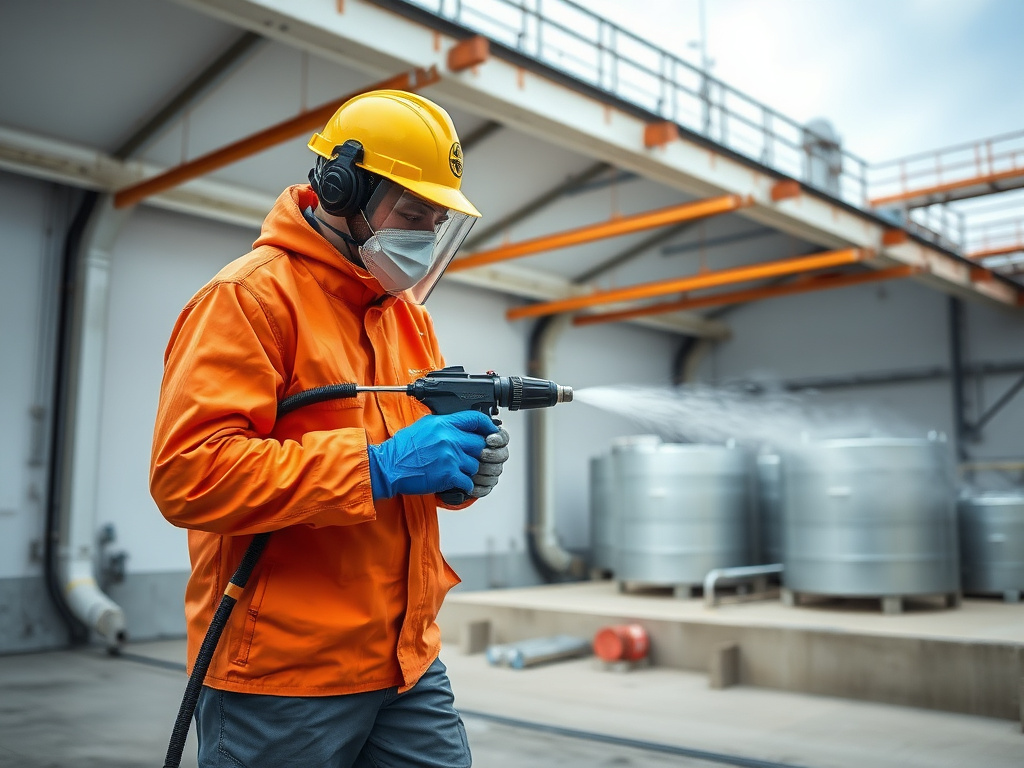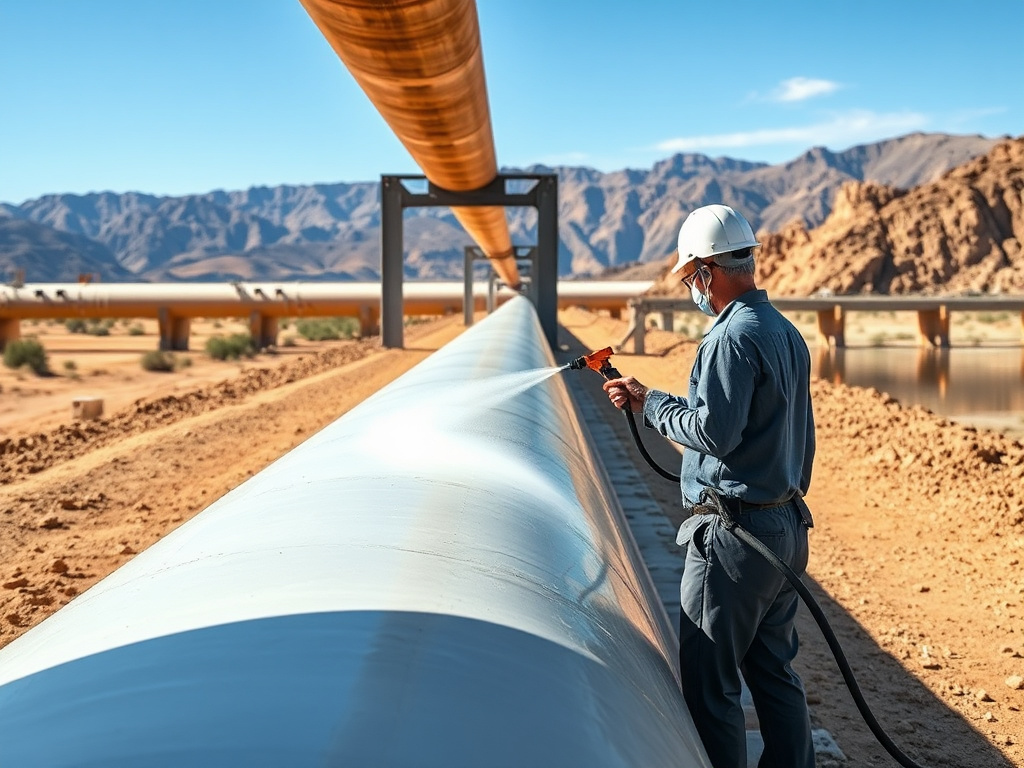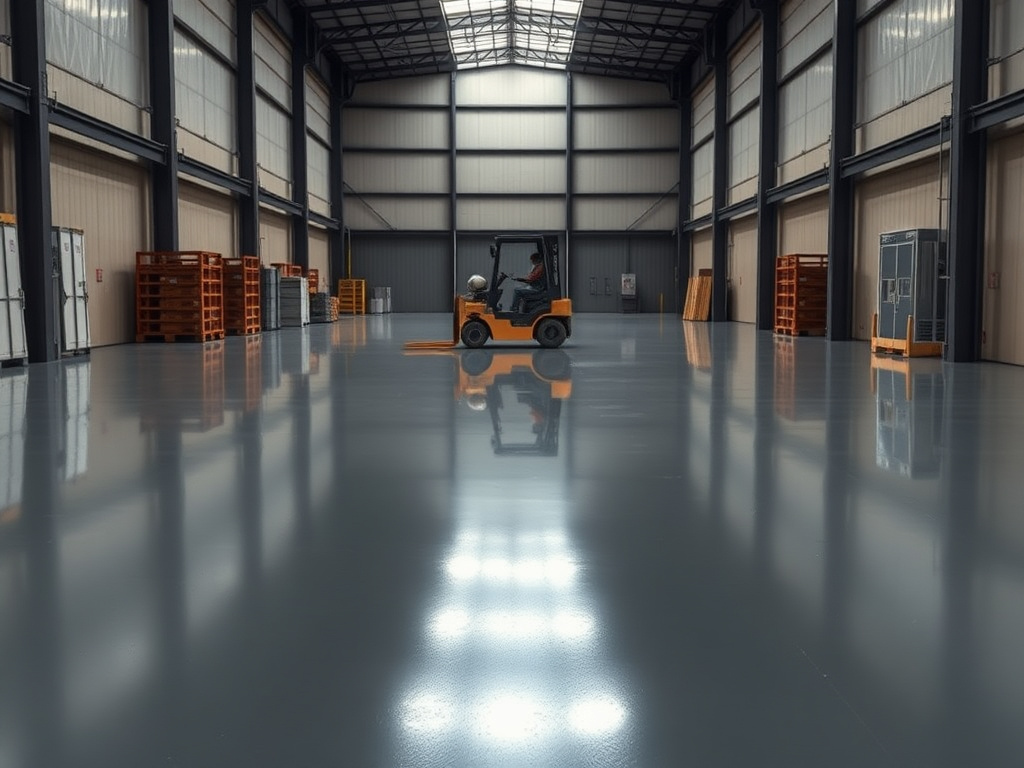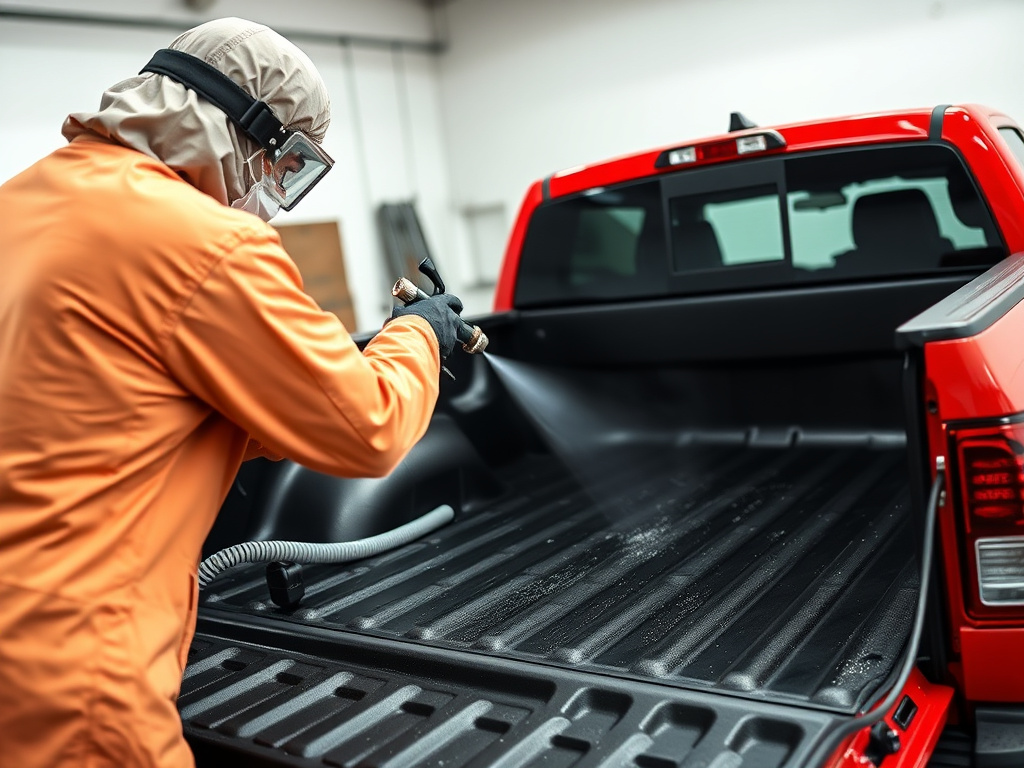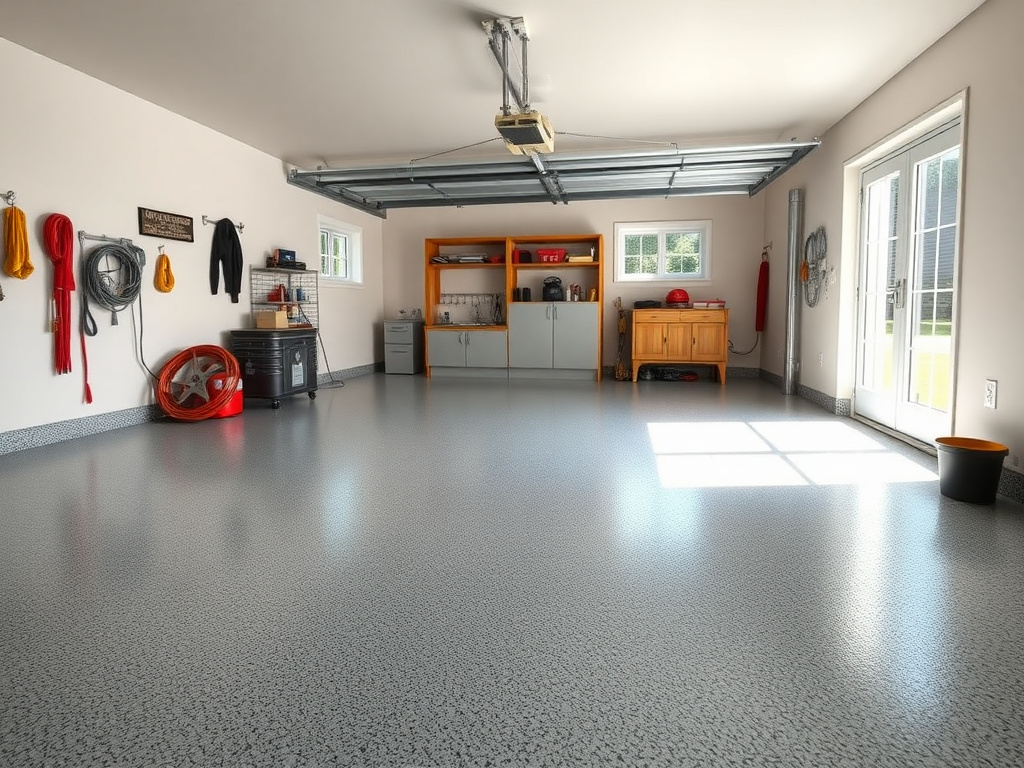
Most people who've heard of polyurea know it as a garage-floor upgrade — a fast, durable coating that beats a bare slab or a peeling epoxy job. That's a fair reputation as far as it goes, but it undersells what true polyurea actually is and where it does its most demanding work. Across Arizona, the same plural-component spray chemistry that coats a residential garage floor is also lining secondary containment berms at chemical-processing facilities, waterproofing water-treatment structures and irrigation infrastructure, protecting dairy and feedlot tanks and wash-down floors, riding along inside fleet and government vehicle beds, and carrying vehicle traffic across parking structures and industrial floors from Yuma to Flagstaff.
This guide is built for the buyers who actually make those decisions — facility and plant managers, municipal and water-district procurement teams, agricultural operators, fleet and government buyers, general contractors, and property owners evaluating a large-scale coating project. It walks through what true polyurea is and why its chemistry matters, the specific industrial, infrastructure, and agricultural environments where it's the right category of material, Arizona's own water and agricultural context, and how a project actually moves from a first site visit to a completed, warrantied installation. Where a number or a data point isn't independently confirmed, we say so — this guide is meant to inform a bid decision, not to inflate one.
1. What true polyurea is, in plain terms
“Polyurea” gets used loosely in the coatings world, so it's worth being precise. True polyurea is a plural-component elastomer: an isocyanate component and a resin blend are stored separately, heated, brought to precise pressure, and then combined at the spray gun itself through purpose-built proportioning equipment. The two components react on contact — not over the course of a workday, but in seconds. A properly applied true polyurea membrane gels almost immediately and reaches a tack-free, walkable state within roughly an hour, compared with the multi-hour-to-day cure windows common to epoxy systems.
That single property — near-instant reaction — is the reason true polyurea requires dedicated plural-component spray rigs and trained crews rather than a bucket, a roller, and a squeegee. It's also the reason almost everything else in this guide is true: fast cure is what makes overnight floor coating possible, what lets a water tank return to service in hours instead of days, and what allows application on a vertical berm wall or an overhead surface without the material sagging before it sets. Epoxy and polyaspartic systems are liquid-applied and cure over a much longer, more temperature-sensitive window; true polyurea's reaction chemistry is what separates it from both, and it's the category this entire guide is about.
2. The mechanical case: elongation, flexibility, and crack-bridging
Cure speed explains why polyurea is fast to install. Elongation is why it holds up once it's in service. True polyurea commonly elongates several hundred percent before it fails — meaning it stretches dramatically rather than cracking when the substrate beneath it moves. A rigid epoxy coating has almost none of that give: when a concrete slab expands and contracts with heat, when a steel tank flexes under load, or when a parking deck's expansion joint opens and closes with the seasons, a rigid coating cracks or delaminates at exactly that stress point.
A flexible, elastomeric membrane does the opposite — it moves with the structure underneath it and bridges hairline cracks rather than telegraphing them to the surface. That mechanical difference is the reason polyurea is the correct category for tanks, canals, roofs, and parking decks, and not just a nicer floor topcoat. It's a structural-movement problem as much as a chemistry problem, and it's the thread running through the infrastructure, agricultural, and traffic-bearing applications covered later in this guide.
3. Seamless, fully-bonded waterproofing
Spray application creates something a rolled-on coating or a sheet-applied liner can't: a truly monolithic membrane, fully bonded to the substrate, with no seams anywhere in the field of application. That distinction matters more than it might sound. Seamed liner systems — welded sheet membranes, overlapping panels, mechanically fastened liners — are only as watertight as their weakest seam, and seams are exactly where liner systems tend to fail over time, whether from UV exposure, mechanical stress, or simple installation error at the joint.
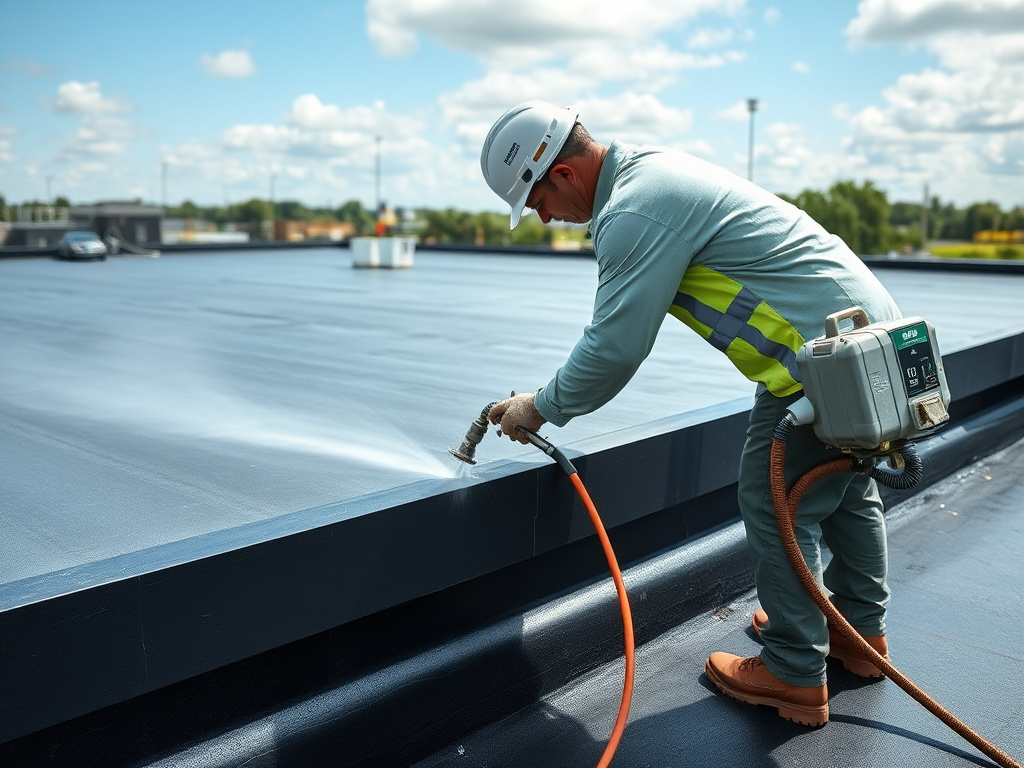
A seamless, fully-bonded membrane removes that failure mode. This is why polyurea belongs in the same conversation as tank linings, containment berms, canal and culvert surfaces, and roofing and waterproofing membranes — not just as a floor finish, but as the actual waterproofing system for a structure. Anywhere water, chemicals, or waste needs to stay fully contained on one side of a surface, a seamless membrane is a fundamentally different — and more reliable — starting point than a seamed one.
4. Chemical and abrasion resistance for industrial environments
True polyurea resists a broad range of acids, fuels, and industrial chemicals, which is the foundation of its use in secondary containment and chemical-processing environments. Combined with the seamless application covered above, it removes the two most common failure paths for a chemical-exposed surface — degradation of the coating material itself, and migration of chemicals through a seam.
The same chemistry also holds up under heavy mechanical abrasion — forklift and pallet-jack traffic, dragged equipment, cattle and livestock traffic, and vehicle wear. That combination of chemical and abrasion resistance is what makes polyurea the right material for commercial and industrial floors, agricultural wash-down surfaces, and containment structures alike — environments where an ordinary coating wears through, stains, or breaks down well before the facility around it is due for its next renovation cycle.
5. Arizona's water infrastructure context
Arizona's water system is not a small, local network — it's a statewide-scale piece of infrastructure, and it's currently in an active investment cycle. The Central Arizona Project (CAP) moves Colorado River water through a 336-mile canal system across Maricopa, Pinal, and Pima counties via 14 pumping plants, supplying both the Phoenix and Tucson municipal systems and roughly a million acres of irrigated agricultural land. It's one of the largest water conveyance systems built in the United States, and it's been in continuous service for decades.
More recently, a coalition of 14 central-Arizona municipalities and water companies received roughly $154 million in federal funding to interconnect the CAP and Salt River Project (SRP) canal systems, and a new SRP pipeline reportedly went into service in mid-2026 to improve access to stored groundwater during dry periods. Taken together, that points to an active, ongoing capital cycle of canal, pipeline, and tank rehabilitation work across the state — we'd stop short of citing specific project counts or timelines beyond what's publicly reported, but the direction is clear: Arizona's water infrastructure is being actively maintained, upgraded, and interconnected, not left to age quietly.
That's the context our water and wastewater infrastructure coatings work sits inside. Seamless polyurea membranes are well suited to potable and non-potable water tanks, secondary and agricultural canals, culverts, lift stations, and treatment-facility structures — anywhere a rehabilitation project needs a fully-bonded lining rather than another seamed liner section bolted or welded into an aging structure.
6. Secondary containment & chemical-processing applications
Secondary containment exists for a specific reason: to keep a leak or spill from a primary storage vessel from reaching soil or groundwater. A secondary containment coating has to be chemically resistant and, just as important, has to be seamless — because a containment system is only as good as its weakest joint. That's exactly the combination true polyurea was built for.
- ✓Containment berms and dike walls around chemical or fuel storage areas
- ✓Loading and unloading pads where spills are most likely to occur
- ✓Tank farms and secondary containment structures around process equipment
- ✓Chemical storage and processing floors exposed to daily material handling
Beyond the material itself, fast cure changes the economics of the project. An active facility can't always take a containment structure offline for the multi-day cure window an epoxy system requires. Because true polyurea reaches a tack-free state in about an hour, containment and processing areas can typically return to service far faster, and phased or off-hours application lets a facility keep most of its operation running while a specific section is coated and cured — for the regulatory and operational reasons that make seamless liners the right call in the first place.
7. Agriculture: a bigger, more concentrated industry than most people realize
Arizona agriculture is easy to underestimate if your picture of the state stops at Phoenix and Tucson. University economic-impact research puts Arizona agriculture's total economic footprint at roughly $31 billion, with roughly $5.4 billion in direct annual cash receipts based on the most recent full breakdown available (2022 figures). The state's top commodities by value include vegetables (over $764 million), dairy products (over $762 million), cattle and calves (over $700 million), greenhouse and nursery products (over $315 million), and cotton (over $224 million) — a genuinely diversified, high-value agricultural economy, not a single-crop footnote.
What's distinctive about Arizona specifically is scale and concentration. Arizona dairies average roughly 1,500 to 2,000 cows per operation, compared with a national average closer to 100 to 150 — meaning Arizona has fewer, dramatically larger operations, each with proportionally larger tank, lagoon-liner, and feed-lane infrastructure needs than a typical small dairy elsewhere in the country. Feedlot and cotton-processing operations follow a similar large-scale pattern. That combination — high-value output concentrated in fewer, bigger facilities — is exactly the profile that benefits from industrial-grade coating systems rather than a general-purpose paint or sealer meant for a much smaller operation.
- ✓Feed troughs and feed lanes exposed to daily animal traffic and waste
- ✓Tank and lagoon linings for water, waste, and byproduct storage
- ✓Wash-down and milking-parlor floors cleaned multiple times daily
- ✓Equipment and loadout areas handling heavy daily vehicle and machinery traffic
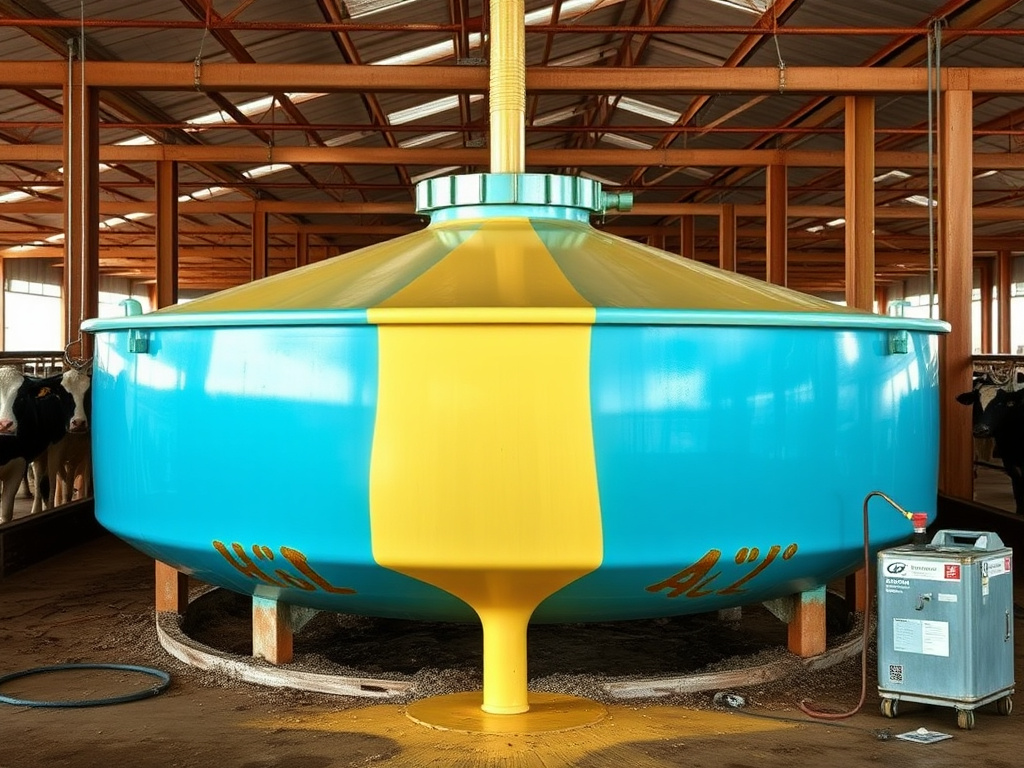
Ordinary concrete and generic sealers don't hold up well against daily wash-down, constant moisture, and animal-waste exposure — they wear, pit, and need re-treatment on a recurring cycle that becomes a real maintenance line item over the life of a large operation. A seamless, chemical- and abrasion-resistant polyurea system, installed through our agricultural and livestock facility coatings line, is built for exactly that daily-use environment, and fast cure means less downtime for operations that run every day of the year.
8. Fleet, equipment, and bed-liner applications
The same impact-absorbing flexibility that lets polyurea bridge structural cracks is what makes it the standard material for spray-in truck bed liners — it absorbs impact from cargo and equipment without the cracking or peeling that affects drop-in plastic liners or thinner coating systems over time. That same logic extends well past pickup beds, through our truck bed liner and fleet/equipment coatings line: trailers, hoppers, dump-truck beds, and agricultural and construction equipment all take the same kind of repeated impact and abrasion that a spray-applied polyurea liner is built to absorb.
Fleet and government buyers get an additional advantage: because true polyurea cures in minutes, a shop can turn multiple vehicles or units around same-day or overnight rather than tying up a fleet vehicle for days at a time. Outdoors, statewide, that same material also resists corrosion, abrasion, and UV exposure across Arizona's summer heat and year-round sun — relevant whether the vehicle works a route in Phoenix, a job site near Flagstaff, or a field outside Yuma.
9. Parking structures and traffic-bearing decks
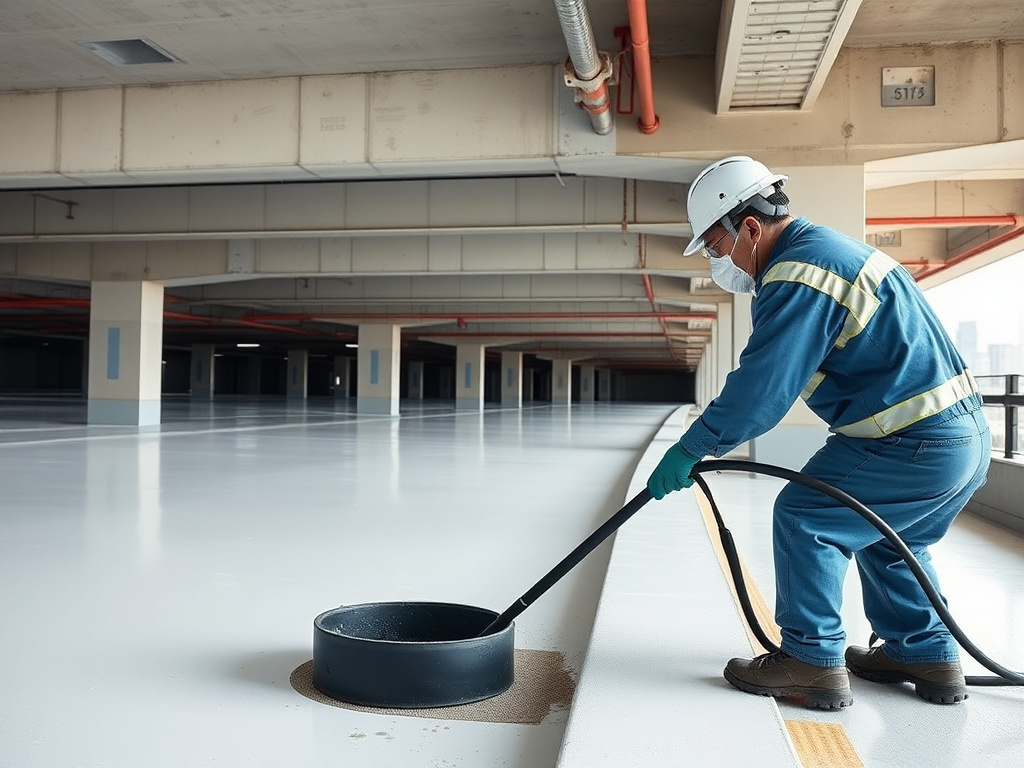
A parking structure or traffic-bearing deck needs two things a rigid coating can't give it at once: a membrane flexible enough to bridge cracks and absorb structural movement, and a surface tough enough to carry ongoing vehicle traffic. Our parking structure and traffic-bearing deck coatings are built specifically for that dual requirement — waterproofing the deck to protect the structure below (where water intrusion leads to rebar corrosion and much more expensive structural repairs down the line) while carrying daily vehicle and pedestrian traffic on the surface.
- ✓Parking garage decks, ramps, and pedestrian walkways
- ✓Stadium and venue decks exposed to large-scale foot and vehicle traffic
- ✓Rooftop parking and plaza decks built over occupied space below
- ✓Expansion joint and crack-bridging detail work at structural transitions
Fast cure has a practical operational benefit here too: a parking structure rarely needs to close entirely for a coating project. Lane-by-lane or level-by-level phased application, timed around polyurea's minutes-not-days cure window, lets a structure stay partially open throughout the project instead of shutting down all at once.
10. Commercial and industrial floors
A warehouse, distribution center, or manufacturing floor takes a different kind of abuse than a residential garage — constant forklift and pallet-jack traffic, dropped tools and pallets, chemical spills, and round-the-clock use in some facilities. Our commercial and industrial floor coatings are built for that load, not scaled down from it.
- ✓Warehouses and distribution centers with sustained forklift and pallet-jack traffic
- ✓Manufacturing plants and food and beverage processing floors
- ✓Auto and fleet service bays exposed to fuel, oil, and chemical contact
- ✓Slip-resistant textures, line striping, and wayfinding for safety and workflow
Fast cure is the operational advantage that makes these projects realistic for a facility that can't simply close for a week. A floor coated overnight or over a single weekend, with phased application and off-hours scheduling worked out ahead of time with facility and operations managers, can be back in service on the next shift rather than sitting idle through a multi-day epoxy cure.
11. Statewide considerations: heat, cold, and remote sites
Arizona isn't a single climate, and a coating contractor that only works Phoenix-metro jobs is implicitly working around a much narrower application window than a truly statewide operation needs. Polyurea's reaction chemistry is far less sensitive to substrate and ambient temperature swings than epoxy's, which is a genuine operational advantage — not a marketing point — across a state that ranges from Yuma's extreme summer heat to Flagstaff's high-elevation winter cold.
Epoxy systems are notoriously particular about substrate and ambient temperature at the time of application; get outside that window and cure quality, working time, and final performance all suffer. Polyurea's much wider tolerance means a project in Yuma in July and a project in Flagstaff in January are both realistic on their own timelines, rather than one of them requiring a seasonal workaround. That same statewide reach extends to rural and remote sites generally — mobile spray equipment and crews travel to agricultural operations, industrial sites, and municipal infrastructure anywhere in Arizona, not just within a metro radius. It's also why the same material and crews coating a water tank in a rural district or a dairy floor outside Yuma are the ones installing residential garage and driveway coatings statewide — one set of equipment and expertise, applied across very different job sites.
12. How a project moves from assessment to completion
Industrial, municipal, and agricultural projects follow a consistent process, regardless of whether the job is a containment berm, a water tank, or a manufacturing floor. The scope and material specification change; the sequence generally doesn't.
Site Assessment & Substrate Testing
We evaluate the substrate, exposure conditions, and project scope on site — including potable-contact or chemical-exposure requirements where relevant.
Surface Preparation
Grinding, cleaning, and repair as needed to set up a proper bond between the substrate and the coating system.
Material Specification
The right polyurea system is specified for the exposure — chemical resistance, potable-contact rating, UV-stable topcoat, or traffic-bearing performance as the project requires.
Plural-Component Spray Application
Trained technicians apply the coating with heated, proportioned spray equipment, phased or scheduled off-hours where an active facility needs to keep operating.
Cure Verification, Inspection & Documentation
A cure and inspection step confirms the system before handoff, backed by a written warranty specific to the application and material system.
Industrial, infrastructure, and agricultural projects are bid individually — based on square footage or volume, substrate condition, material specification, and site access — rather than priced from an instant-quote calculator. A site assessment is where that project-specific bid actually gets built.
Frequently asked questions
How fast does true polyurea actually cure?
+
Gel time is measured in seconds to minutes, and the surface is typically tack-free and walkable within about an hour — versus a multi-hour-to-day cure window for epoxy systems. That single property is what makes fast return-to-service possible on tanks, containment structures, and traffic decks.
Is polyurea more chemical-resistant than epoxy?
+
For most industrial acids, fuels, and solvents, yes — polyurea's chemistry and seamless application make it the standard choice for secondary containment and chemical-processing environments, where a seamed or brittle coating is the usual point of failure.
Does polyurea handle temperature extremes better than epoxy?
+
Yes. Its reaction chemistry is far less sensitive to hot or cold substrate and ambient conditions, which matters statewide — from Yuma's summer heat to Flagstaff's winter cold — in a way it simply doesn't for a Phoenix-only contractor.
Can polyurea be used inside a potable water tank?
+
Yes, with an appropriate potable-contact-rated material system. That system is confirmed and selected on a per-project basis during the site assessment, since not every polyurea formulation is rated for drinking-water contact.
Is polyurea suitable for lining irrigation canals or culverts?
+
Yes — its seamless, flexible, fully-bonded membrane is well suited to canal and culvert environments, where joints and seams between sheet-liner sections are typically the first place a lining system fails.
How fast can a water tank or containment structure return to service after coating?
+
Because polyurea cures in minutes rather than days, tanks and containment structures can typically return to service far faster than with epoxy-based systems, which meaningfully reduces the operational downtime of the rehabilitation project itself.
Can you coat a facility without shutting it down completely?
+
In most cases, yes. Phased application and off-hours scheduling let industrial, municipal, and agricultural facilities keep running lines, lanes, or sections of a site while the rest is being coated and curing.
Do you work with municipalities and water districts directly on bid projects?
+
Yes — the municipal and district bid process covers facility assessment, material specification (including potable-contact requirements where relevant), and scheduled application for public and district infrastructure projects.
See the full frequently asked questions page for all of our answers on true polyurea, project process, and working with us on an industrial, infrastructure, agricultural, or residential project.