Fleet & equipment protection
Truck Bed Liners & Fleet/Equipment Polyurea Coatings
Cargo beds, trailers, hoppers, and heavy equipment take a constant beating from impact, abrasion, and Arizona's sun. True polyurea's spray-applied, fast-cure system is built to protect it — and to get a vehicle or a whole fleet back in rotation fast.
Why true polyurea
Why true polyurea is the standard for spray-in bed liners
A truck bed takes some of the hardest daily abuse of any surface on a vehicle — dropped tools, shifting cargo, gravel and debris, and constant loading and unloading. A drop-in plastic liner can shift, trap moisture underneath, and eventually let debris work its way between the liner and the bed itself. A thin spray coating or a standard paint-on bed coating can look similar at install but doesn't have the elongation to absorb real impact without cracking or peeling loose over time.
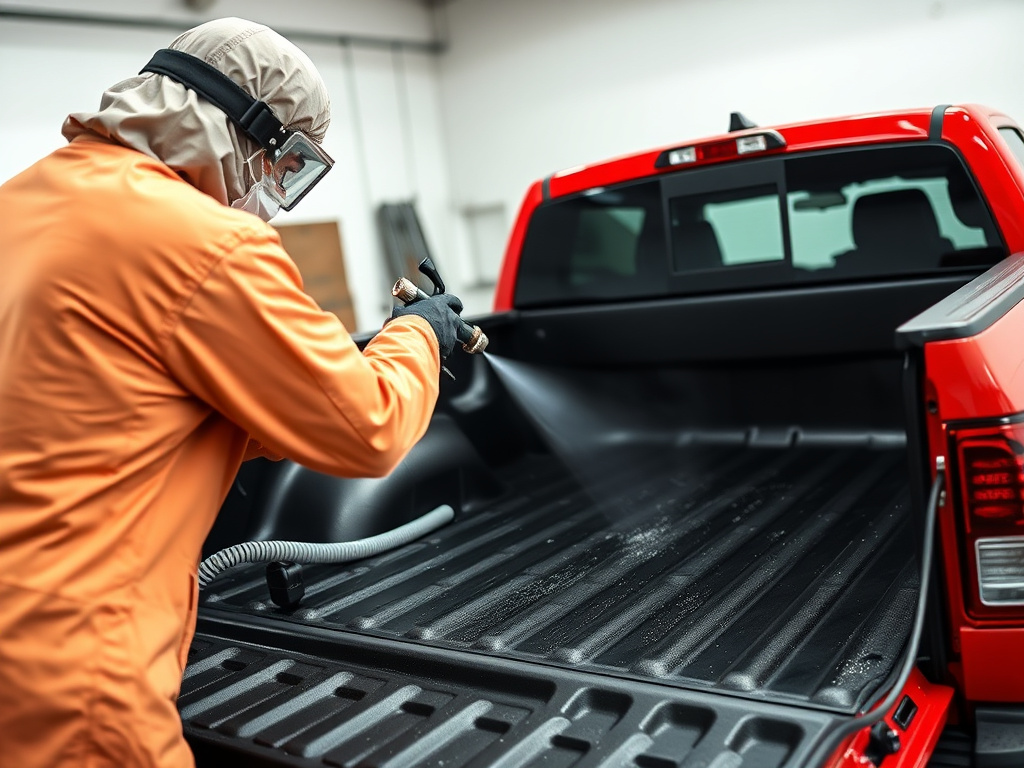
True polyurea solves both problems at once. It's a plural-component, spray-applied elastomer — two chemical components meet at the spray gun, react, and bond directly to the prepared bed surface, gelling in seconds to minutes. The result is a seamless, fully-bonded liner with no gap for moisture or debris to collect underneath, and enough flexibility to absorb impact from dropped tools or shifting cargo without cracking.
That same underlying chemistry is why we treat bed liners as one line of business among several rather than a stand-alone specialty — it's the identical plural-component polyurea system we use on industrial floors, secondary containment structures, and water infrastructure, scaled down to a truck bed instead of a warehouse floor. The equipment, training, and material discipline are the same; only the application size changes.
For fleet and government accounts, that consistency matters more than it might for a single vehicle owner: every unit in a fleet gets the same specified system and the same fast-cure turnaround, rather than whatever a generalist shop happens to have on hand that week.
Performance specifications
Impact, abrasion, corrosion, and UV resistance for vehicles working outdoors
Vehicles and equipment that work outdoors statewide face a wider range of exposure than a garage-kept passenger vehicle — sustained sun, dust, road chemicals, and constant loading. The specification below reflects what a properly applied plural-component polyurea bed liner or equipment coating is built to handle.
| Cure / turnaround | Gels in seconds to minutes and reaches a tack-free state within about an hour under typical conditions, which is what makes same-day or overnight turnaround possible for a single vehicle or a multi-unit fleet job. |
|---|---|
| Impact resistance | Elongates far beyond a rigid coating before failing, absorbing the impact of dropped tools, cargo, and equipment loads without the cracking, chipping, or peeling that affects thinner or rigid alternatives. |
| Bond & seam integrity | Spray application creates a seamless, fully-bonded surface across the bed, rails, and tailgate — no seams or edges for moisture or debris to work underneath over time. |
| Abrasion & corrosion resistance | Resists the abrasive wear of cargo, gravel, and equipment loads plus the corrosive exposure of road chemicals, moisture, and Arizona's dust and grit. |
| UV & outdoor exposure | Formulated to hold color and surface integrity under sustained sun exposure for vehicles and equipment that work outdoors statewide, from Yuma summers to Flagstaff winters. |
| Surface texture | Textured, skid-resistant finish standard on bed and cargo surfaces; smoother finishes available for equipment components where texture isn't the priority. |
General performance characteristics of a properly specified polyurea bed liner or equipment coating system — confirmed against your specific vehicle, trailer, or equipment application at quote time.
Beyond pickup beds
Trailers, hoppers, dump-truck liners, and ag & construction equipment
Pickup bed liners are the most familiar application, but the same spray-applied polyurea system protects a much wider range of equipment surfaces that see similar impact, abrasion, or corrosive exposure. Anywhere a rigid or thin coating would crack, chip, or wear through under repeated loading, a seamless polyurea liner is the more durable option.
This is also where the statewide, industrial-first identity of the business shows up most directly: agricultural and construction equipment working rural sites, dump-truck and hopper liners on active jobsites, and trailer beds hauling loose or abrasive material all fall inside the same line of work as a fleet pickup truck.
- ✓Pickup truck beds, rails, and tailgates
- ✓Flatbed and utility trailer decks
- ✓Dump-truck beds and hopper liners
- ✓Agricultural equipment components exposed to abrasion and chemical contact
- ✓Construction equipment buckets, liners, and wear surfaces
- ✓Government and municipal fleet vehicles under service contracts
Fleet & government work
Coating multiple vehicles or units efficiently
Fleet and government contract work runs on a different rhythm than a single vehicle job — units need to rotate back into service on a schedule, not whenever a shop gets around to them. Polyurea's fast cure is what makes that rhythm realistic across multiple vehicles or equipment units in the same visit.
Fleet Assessment
We review the vehicle or equipment list, surface condition, and scheduling constraints for the account.
Scheduled Rotation
Units are sequenced through prep and coating so the fleet keeps functioning while work is underway.
Spray Application
Plural-component polyurea applied to each bed, trailer, or equipment surface by trained technicians.
Fast Return to Rotation
Fast gel and cure time means each unit returns to service quickly instead of sitting idle for days.
Fast turnaround
Same-day or overnight service to keep vehicles in rotation
A vehicle or piece of equipment sitting idle waiting on a coating to cure is a real cost for a fleet or construction account — every day a truck is off the road is a day it isn't generating revenue or completing work. Most bed-liner and equipment-coating approaches built around epoxy or thinner coatings extend that downtime with multi-hour or multi-day cure windows.
True polyurea's gel time — seconds to minutes — and its walkable, functional cure state within about an hour change that math directly. A single vehicle can often be prepped, coated, and ready the same day or the next morning. A multi-unit fleet job is scheduled around that same fast turnaround, unit by unit, rather than treating every vehicle as a multi-day commitment.
That turnaround advantage is the same underlying chemistry we rely on across the rest of the business — the identical property that lets us return a warehouse floor or a secondary containment structure to service quickly is what makes a same-day bed liner or overnight fleet rotation possible. For the fuller technical picture of why cure speed, flexibility, and seamless bonding matter across industrial and fleet applications statewide, see our guide on polyurea for Arizona's industrial, infrastructure, and agricultural sectors.
Whether it's a single pickup truck or an entire fleet under contract, we quote and schedule the job around your actual timeline — not a generic shop queue.
Frequently Asked
Bed liner & fleet coating questions
Why is true polyurea the standard for spray-in bed liners instead of a drop-in liner or a thinner coating?
+
True polyurea is a spray-applied elastomer that bonds directly and seamlessly to the bed, rails, and tailgate, then gels in seconds to minutes and reaches a durable, impact-absorbing state within about an hour. A drop-in liner can trap moisture and shift underneath cargo, and thinner coatings don't have the same elongation to absorb impact without cracking or peeling over time.
Can you coat more than pickup truck beds — what about trailers, hoppers, or agricultural equipment?
+
Yes. The same plural-component polyurea system used on truck beds is applied to trailers, dump-truck and hopper liners, and agricultural and construction equipment components that see similar impact, abrasion, or corrosive exposure.
How do you handle multi-vehicle fleet or government contract work?
+
Fleet and government accounts are scheduled and coated efficiently across multiple vehicles or units, using the same fast-cure process on each so units can rotate back into service without holding up the rest of the fleet.
How fast can a truck or piece of equipment be back in service after coating?
+
Because true polyurea cures in minutes rather than hours, most vehicles and equipment can return to service the same day or the next morning, depending on the scope and site conditions confirmed at the time of the quote.
Get a quote for a vehicle or a fleet contract
Tell us whether you need a single bed liner or a multi-unit fleet or equipment contract and we'll schedule around your timeline — statewide across Arizona.
Go deeper
More on our process and statewide polyurea work
Polyurea for Arizona's Industrial & Infrastructure Sectors
The complete statewide guide to true polyurea, including fleet, equipment, and bed-liner applications.
About Arizona Polyurea Coatings
A true-polyurea specialty contractor serving industrial, municipal, agricultural, fleet, and residential clients statewide.
All Polyurea Coating Services
See all eight lines of business, from secondary containment to residential garage coatings.