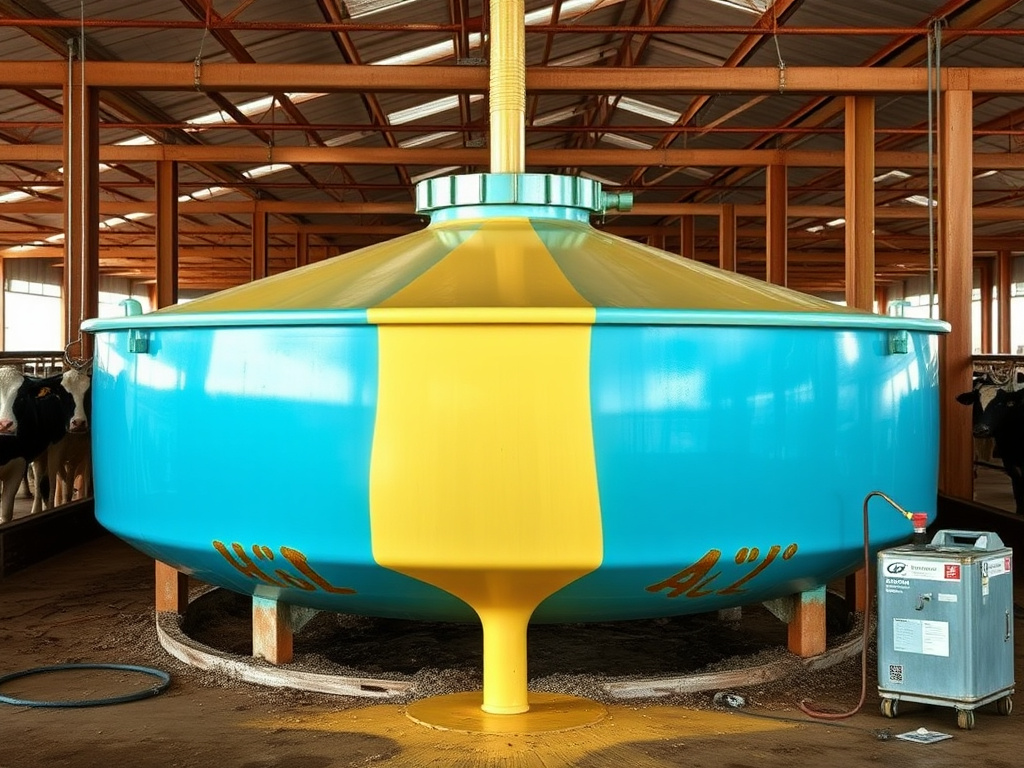
Agricultural & Livestock
Agricultural & Livestock Facility Polyurea Coatings
Feed lanes, tank and lagoon linings, wash-down floors, and loadout areas all share the same daily punishment — constant moisture, waste exposure, and heavy traffic. A seamless polyurea system is built for exactly that, statewide across Arizona's agricultural operations.
A bigger, more concentrated industry
Arizona's agricultural operations run at industrial scale
Arizona's agricultural sector is a far bigger and more concentrated part of the state's economy than most people outside the industry realize. University economic-impact research puts Arizona agriculture's total footprint at roughly $31 billion, built on top-value commodities including vegetables, dairy products, cattle and calves, greenhouse and nursery products, and cotton. That's not a scattering of small family operations — it's a genuinely large, industrial-scale agricultural economy running statewide.
Dairy is a particularly clear example of that scale. Arizona dairies operate far larger than the national norm, commonly running 1,500 to 2,000 head per facility versus a national average closer to 100 to 150 cows per operation. That difference isn't incidental — it means fewer, much bigger dairy facilities statewide, each with proportionally larger tanks, lagoons, feed lanes, and wash-down floor infrastructure than a small operation would ever need.
Cattle and calf operations, cotton ginning and packing facilities, and greenhouse and nursery operations round out the same pattern — Arizona's climate and water infrastructure support agricultural operations that run at a genuinely industrial scale, not a hobby-farm scale. Facilities built around that volume need infrastructure coatings that match — a feed lane or lagoon liner sized and specified for a 1,800-head dairy is a different engineering problem than a small backyard operation, even though both are technically "agricultural" work.
That's the context this service line is built around: industrial-grade polyurea material and mobile spray equipment applied to facilities that operate at real production scale, statewide, not a residential-style patch job scaled up. For the same industrial-grade material applied to water and process infrastructure more broadly, see our statewide industrial, infrastructure & agricultural guide.
That same concentration shows up across the rest of the state's top-value commodities, not just dairy. Cotton ginning and packing facilities, cattle and calf operations, and greenhouse and nursery growers all run infrastructure at a genuinely commercial scale, and each brings its own specific coating problem: a cotton facility's loadout and equipment floors see constant fiber dust, wheel traffic, and vehicle movement; a greenhouse or nursery operation's wash-down and drainage floors see near-constant moisture; a cattle operation's feed lanes and loadout pens see continuous hoof and vehicle traffic side by side. The material and application process stay the same across all of it — plural-component, spray-applied polyurea forming a seamless membrane — while the surface preparation, detail work, and material specification are scoped to the specific facility during a site assessment. For more on how Arizona's dairy, feedlot, and cotton operations are approaching this category, see our post on why Arizona dairies, feedlots, and ag operations are turning to polyurea tank linings and floor coatings.
Where this coating gets used
Feed lanes, tanks, wash-down floors, and loadout areas
Agricultural and livestock facilities put a handful of surfaces through the harshest daily exposure on the whole property. These are the areas where a seamless polyurea system replaces a maintenance cycle that ordinary concrete or paint can't keep up with.
- ✓Feed troughs and feed lanes — daily contact with feed acids, moisture, and constant scraping or scooping wear
- ✓Tank and lagoon linings — dairy waste storage, irrigation and stock tanks, and lagoon structures needing a seamless, chemical- and waste-resistant barrier
- ✓Wash-down and milking-parlor floors — surfaces hosed down multiple times a day and exposed to cleaning chemicals as a matter of routine
- ✓Equipment and loadout areas — high-traffic zones where trucks, loaders, and heavy equipment move across the same surface daily
Every one of these surfaces shares the same underlying problem: constant moisture, waste and feed-acid exposure, and heavy traffic that wears through unprotected concrete far faster than the facility can afford to repair or replace it. A seamless, fully-bonded polyurea system is applied once and holds up against that exposure as one continuous barrier, rather than a coating that needs to be patched and repatched at every joint and seam.
Built for daily exposure
Resisting moisture, waste, and chemical exposure day after day
Agricultural facilities don't get an occasional chemical exposure the way some industrial sites do — they get daily wash-down, constant animal-waste contact, and feed acids as a routine part of operating, every single day the facility runs. That's a fundamentally different demand than a coating engineered for occasional spills.
| Moisture exposure | Seamless, fully-bonded membrane with no joints for standing water or wash-down runoff to migrate through — relevant anywhere a surface is hosed down or stays wet for extended periods. |
|---|---|
| Animal-waste exposure | Resists the chemical and biological exposure typical of manure, feed acids, and cleaning agents far better than ordinary concrete or paint, which break down under repeated exposure. |
| Traffic wear | High abrasion resistance for hooved animal traffic, forklifts, loaders, and delivery vehicles moving across the same surface multiple times a day. |
| Cure / downtime | Gels in seconds to minutes and is typically walkable within about an hour, letting a barn, parlor, or loadout area return to daily operation far faster than an epoxy-based system allows. |
General exposure resistance for a plural-component polyurea system, confirmed against a specific facility's material, waste, and traffic conditions during a site assessment.
Minimizing downtime
Fast cure means less downtime for facilities that run every day
A dairy, feedlot, or cotton-ginning facility doesn't have a slow season where equipment and floors can sit unused for a multi-day epoxy cure. Cows still need to be milked, feed still needs to move down the lane, and trucks still need to load out on schedule. Because true polyurea gels in seconds to minutes and reaches a walkable, usable state in about an hour, coating work can typically be phased section by section and scheduled around the facility's actual daily routine, instead of forcing an extended full shutdown.
Site Assessment
Evaluate the specific tank, lagoon, feed lane, or floor area, its exposure conditions, and the facility's daily operating schedule.
Surface Preparation
Clean, grind, and repair the substrate as needed so the membrane bonds properly to concrete, steel, or existing lining.
Spray Application
Plural-component polyurea applied section by section, often scheduled around milking, feeding, or loadout windows.
Cure & Handoff
A short cure and inspection step confirms the system before the area returns to full daily use.
Standing up to real production traffic
Durability under heavy animal and vehicle traffic
A feed lane or loadout area at a large-scale dairy or feedlot carries a punishing mix of traffic — hundreds of head of cattle moving across the same surface multiple times a day, alongside loaders, feed trucks, and delivery vehicles running the same routes on a fixed schedule. Ordinary concrete wears through under that combination of hoof traffic, wheel load, and constant moisture far faster than most facilities can budget to repair.
True polyurea's abrasion resistance and flexibility address both halves of that problem at once — the material holds up under sustained wheel and hoof traffic, and its elongation lets it absorb minor substrate movement and vibration from heavy equipment without cracking or delaminating the way a rigid coating would over the same duty cycle.
The same durability applies inside milking parlors and equipment areas, where daily wash-down cycles combine with constant foot and equipment traffic. A seamless membrane holds up to that combination without the joint failures that show up first in a seamed or tiled floor system under the same conditions.
We serve dairies, feedlots, cotton-ginning and packing facilities, and rural agricultural operations statewide — not just the Phoenix-metro area. Mobile spray equipment travels to Tucson and southern Arizona's agricultural belt, Yuma's extreme-heat growing region, and rural sites throughout the state, because agricultural clients are a core part of this business, not an edge case. Learn more about our statewide approach on our about page.
Requesting an assessment
Getting a bid scoped to your specific facility
An agricultural coating project is bid around the specifics of the facility, not a flat per-square-foot rate borrowed from a residential job. Tank and lagoon volume, feed-lane square footage, existing substrate condition, and how many separate areas need coating all factor into the specification a site assessment produces — a 1,800-head dairy's wash-down floors and a smaller feedlot's loadout pad call for a different scope even when the underlying material is the same.
Scheduling is worked out the same way. Agricultural operations run on their own calendar — calving, milking rotations, feed deliveries, and harvest or ginning seasons all shape when a facility can tolerate a crew on-site, and a coating project gets scoped around that operating rhythm rather than the other way around.
Because mobile spray equipment travels to the site, an assessment can typically happen on the facility's own schedule rather than requiring a shop visit or a trailered structure. That's especially relevant for rural and remote agricultural sites statewide, where the nearest specialty coating contractor might otherwise be hours away.
We work directly with facility owners, operators, and managers on this kind of project — no separate residential-style instant-quote form, just a site visit, a specification matched to the facility, and a written warranty on the finished work.
Common questions
Agricultural & livestock facility coating FAQ
What agricultural applications use polyurea coatings?
+
Feed troughs and feed lanes, tank and lagoon linings, wash-down and milking-parlor floors, and equipment or loadout areas — anywhere daily moisture, waste exposure, and heavy traffic wear out ordinary concrete or paint faster than it can be replaced.
Can a dairy or feedlot keep running while a tank or floor is being coated?
+
In most cases, yes. Because polyurea gels in seconds to minutes and reaches a walkable, usable state quickly, work can often be phased section by section or scheduled around a facility's daily routine, minimizing the time any one area is out of use.
Is polyurea tough enough for daily wash-down and heavy animal traffic?
+
Yes — true polyurea's abrasion resistance and seamless, fully-bonded application are well suited to surfaces that get hosed down repeatedly and see constant hoof, wheel, and equipment traffic, which is exactly the exposure that wears out standard concrete and paint fastest.
Do you work with large-scale dairy and feedlot operations, or just small farms?
+
Both — Arizona's agricultural operations run from smaller rural sites to some of the largest-scale dairy and feedlot facilities in the country, and the same industrial-grade polyurea material and mobile spray equipment scale to either.
Get a site assessment for your ag or livestock facility
Tell us about your dairy, feedlot, or agricultural facility and we'll come back with a scoped coating plan built around your daily operating schedule — statewide across Arizona.